
It’s time to shed some light on a common question in the financial world that impacts your credit score: Is it better to carry a balance on your credit cards or pay them off each month?
Knowing and understanding this is as essential as selecting the right home.
While the common advice is to pay off our credit cards every month, the reality is more complex. Maintaining a balance of around 30% of your credit limit can actually enhance your credit score.
It’s an unexpected revelation, akin to finding out that a simple change like painting your living room blue could boost your home’s selling price.
Let’s delve deeper and learn the best practices for managing your credit.
Why Is Payment History So Important in Determining My Credit Score?
Your credit score is the financial equivalent of a home’s foundation. It is crucial for securing loans and mortgages.
Payment history is the most significant component, comprising 35% of your score. Timely payments improve your score over time, akin to how regular maintenance boosts a home’s value. Conversely, late payments can damage your credit score, similar to how neglect can degrade a home.
Maintaining a stellar payment history requires discipline and planning. It’s not just about avoiding late payments. It’s also about building a solid history of financial responsibility that lenders value highly.
How does consistent on-time payment benefit your long-term credit health?
Regular, timely payments are the cornerstone of a strong credit score. They demonstrate financial reliability and commitment, akin to investing in your home’s long-term value.
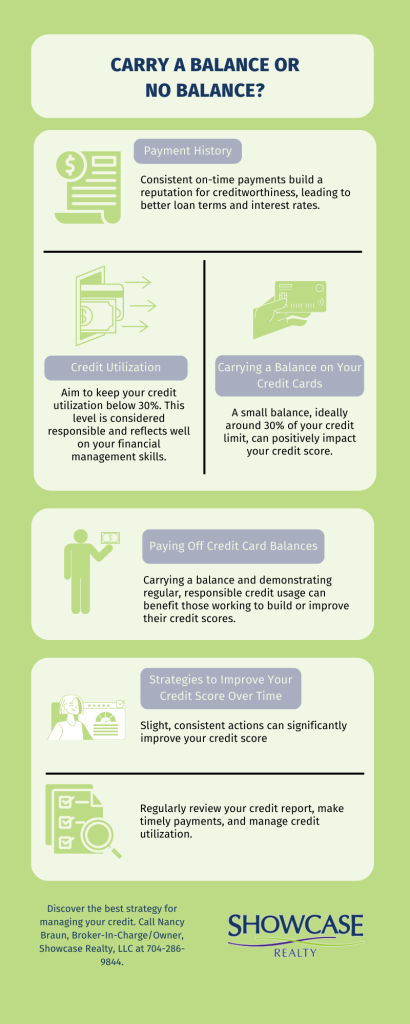
Consistent on-time payments build a reputation for creditworthiness, leading to better loan terms and interest rates.

How Does Credit Utilization Impact My Credit Score?
Credit utilization, the ratio of your credit card balances to your credit limits, significantly affects your credit score, accounting for 30%.
High credit utilization can suggest financial overextension, just as a poorly maintained home can deter buyers. Low utilization indicates responsible credit management, similar to how a well-maintained home is more attractive to buyers.
Understanding and managing credit utilization is crucial. It’s about finding the right balance between using your credit and not overburdening your financial capabilities.
What is the ideal credit utilization rate for a healthy credit score?
Aim to keep your credit utilization below 30%. This level is considered responsible and reflects well on your financial management skills. It is like a well-kept and organized home that appeals to potential buyers.
Regularly monitoring and managing your credit utilization can enhance your credit score.

Is Carrying a Balance on Your Credit Cards Beneficial for Your Credit Score?
Contrary to popular belief, paying off your credit card balance in full each month isn’t always the best strategy. Carrying a small balance can show active and responsible credit use. It’s akin to how living in and maintaining a home can be more beneficial than leaving it vacant.
A small, manageable balance can be a strategic move, showing lenders that you can handle ongoing credit responsibly.
How can maintaining a manageable balance improve your credit score?
A small balance, ideally around 30% of your credit limit, can positively impact your credit score. It shows active credit usage and financial responsibility, like regular home updates, which can enhance property value.
Click here to discover essential insights on the 11 key factors for passing your home inspection.
Should You Pay Off Credit Card Balances to Avoid Interest Rates?
Carrying a balance on your credit cards means incurring interest charges. If you have a good credit score, paying off your balances can be a wise decision. It’s similar to how timely home maintenance can prevent costly repairs.
However, carrying a balance and demonstrating regular, responsible credit usage can benefit those working to build or improve their credit scores.

What Lesser-Known Factors Also Affect Your Credit Score?
The length of your credit history, new accounts, and inquiries collectively influence your credit score. Neighborhoods, renovations, and market trends in real estate play a role but are more decisive than the property’s foundation and appearance.
A long and positive credit history can make you more appealing to lenders. It’s like how a well-established home in a good neighborhood attracts buyers.
How can you effectively manage these lesser-known credit score factors?
Build a long, positive credit history by maintaining older accounts and being cautious with new credit applications. This approach enhances your creditworthiness, just as a well-maintained, strategically upgraded home increases its market appeal.
What Strategies Can Improve Your Credit Score Over Time?
Improving your credit score requires a thoughtful strategy, like planning home renovations. Focusing on timely payments and managing credit utilization effectively are essential.
Slight, consistent actions can significantly improve your credit score, akin to how gradual home upgrades can cumulatively enhance property value.
Regularly review your credit report, make timely payments, and manage credit utilization. These steps are part of your ongoing financial maintenance, like regular home care and upgrades.
When Is the Right Time to Pay Off Your Credit Card Balances?
Deciding when to pay off your credit card balances is a strategic decision, similar to timing a home renovation or sale. If your credit score meets your goals and you’re financially able, paying off your balances can be beneficial.
This move can save you money on interest and improve your financial standing, akin to a well-timed home upgrade that enhances value.
How do you decide when to repay your credit card balances?
Assess your financial goals and capabilities. Paying off your balances when financially feasible can strengthen your financial position, just like strategic home improvements can enhance your property’s value.
Navigating credit management is a nuanced process akin to the complexities of the real estate market. At Showcase Realty, we’re ready to guide you through both. We’re here to help you navigate the financial pathways that lead to successful homeownership.
Are you buying, selling, or seeking to improve your financial health for homeownership? We’re here to help.
Contact me, Nancy Braun, at 704-286-9844 or visit showcaserealty.net. Let us provide you with expert guidance and support in every aspect of real estate and financial planning.
Discover the secrets of maximizing your experience in the “Queen City” by clicking here. https://showcaserealty.net/free-guide-to-charlotte/
Comments are closed.